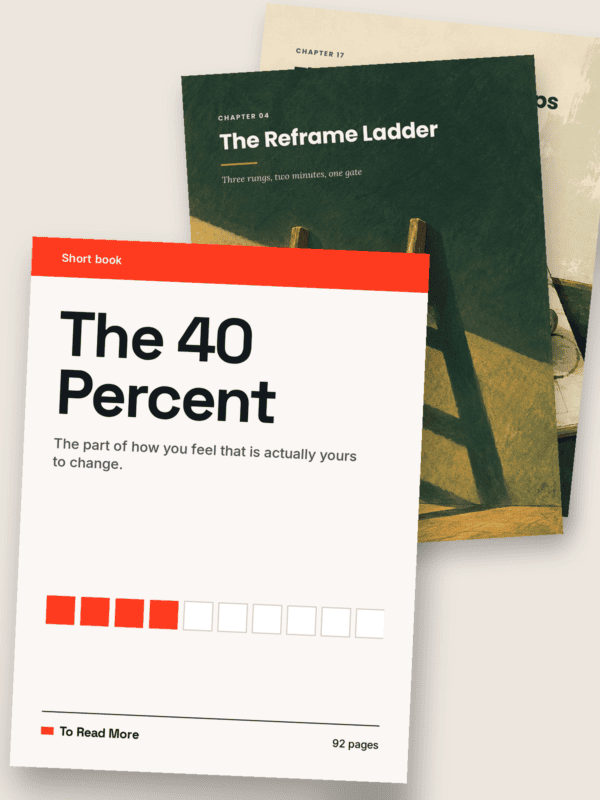
The 40 Percent
How you feel is partly set by genes and circumstance — the research argues about exactly how much. This short book is about the part that isn’t: six everyday drivers you can actually move, and forty small ways to move them. 92 pages.

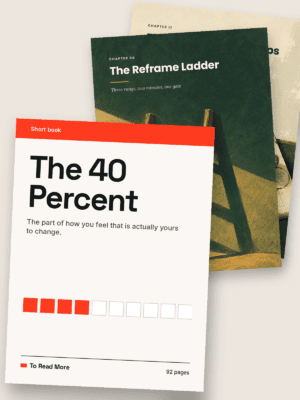
The 40 Percent
Description
You have probably been told that happiness is a choice. It isn’t, and this book won’t pretend it is.
A 2005 paper proposed that roughly half the variation in long-term wellbeing comes from a genetic set point, about a tenth from circumstances, and about forty percent from what people repeatedly do with their attention and behaviour. That split has since been seriously challenged, and one of its own authors now describes it as an illustration rather than a measurement. The book says so on page five, before it says anything else.
What survives the criticism is the direction: part of how you feel responds to what you do, week to week. This is a short book about that part — and only that part.
What this book argues
That the movable part runs through six drivers, and they run on different clocks. The way you narrate a bad hour can change in minutes. What you notice changes over weeks. The people at the edge of your life, work that absorbs you, sleep and the body, and a sense of purpose change more slowly. Most advice treats them as one thing, which is why most advice stops working.
Inside
- A short self-check: score the six drivers against the last thirty days and read the two lowest first
- Six parts, four short chapters each — the pattern, the advice that made it worse, the research, and a practice that fits a normal week
- Forty numbered moves, most of them under a minute
- The Reframe Ladder, the Specificity Rule, the Five-Minute Reach and the Flow Equation
- The research named and cited, including where it is disputed
What this book will not do
It will not promise a permanent emotional state, because there is no such thing. Bad weeks arrive regardless. What the six drivers appear to do, in the published work, is make those weeks rarer, shallower and shorter — and the book says that is the realistic claim. It is not medical or psychological advice. If low mood persists, a doctor or qualified professional is the right next step.
Who this isn’t for
Anyone looking for positive thinking. Chapter two is called Why Affirmations Backfire.
Format: 92 pages, 24 chapters in six parts. PDF, any device.
Instant download after checkout. PDF, on any device. All sales are final.