 To Read More Editors

An end of year reflection is one of the few habits that costs nothing and changes how the next twelve months start. Not a list of resolutions, and not a highlight reel for social media: just an honest look at what happened, what mattered and what you’d like to be different, written down so you can actually use it.
Below you’ll find 40 end of year reflection questions grouped into five short rounds, plus a simple way to turn your answers into a one-page plan for the year ahead. You can do it in one evening with a notebook and a hot drink.
Quick answer: block 60 to 90 minutes, look back through your calendar and photos first, then answer the questions in five rounds: what happened, what worked, what drained you, what you learned, and what comes next. Finish by choosing no more than three priorities for the new year and writing them on a single page.

How to do an end of year reflection (in one evening)
- Pick a time. Somewhere between mid-November and early January works. Book 60 to 90 minutes with nothing after it.
- Gather your evidence. Scroll back through your calendar month by month, then your photos. Memory is unreliable; your calendar isn’t. Jot down the big events as you go.
- Write, don’t think. Answer each question in a line or two. Speed beats polish. You can skip any question that doesn’t fit your year.
- Be fair to yourself. The point of an end of year reflection is to learn, not to grade yourself. Write it as you’d write about a friend.
Round 1: what actually happened this year
- What were the three biggest events of my year, good or bad?
- If my year were a book, what would this chapter be called?
- What did I start that I didn’t have twelve months ago?
- What ended, closed or left my life?
- Where did most of my time go?
- Where did most of my money go?
- Who did I spend the most time with?
- What surprised me most?
Free printable
10 free Friction Cards
Ten two-minute moves for the moment you cannot start. A printable PDF, sent to your inbox.
Free. Unsubscribe anytime.
Round 2: what worked and what I’m proud of
- What am I most proud of, even if nobody else noticed?
- What habit or routine actually stuck?
- When did I feel most like myself?
- What was the best decision I made?
- Which hard conversation am I glad I had?
- What did I do that my younger self would be impressed by?
- Who helped me most, and have I told them?
- What small daily thing made the biggest difference?
Round 3: what drained me
- What did I keep saying yes to that I wish I’d said no to?
- What drained my energy most reliably?
- What did I put off all year?
- Which worry took up the most space, and did it happen?
- What did I tolerate that I no longer want to tolerate?
- Where did my money go that I don’t feel good about?
- Which relationship needs attention?
- What would I quietly drop if nobody would notice?
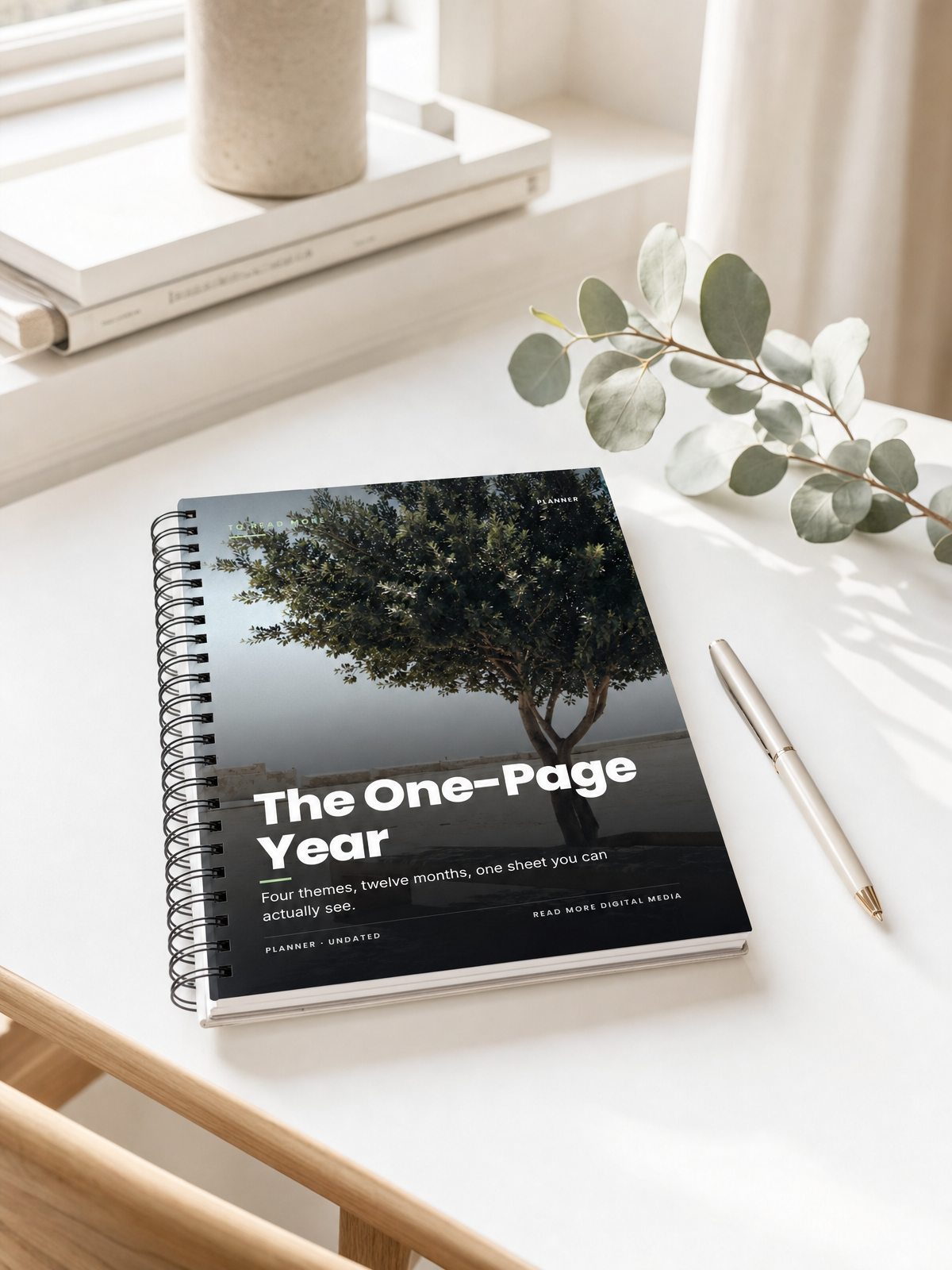
The One-Page Year
A printable planning system that fits a whole year on one page: three priorities, the quarters, and the few dates that matter. Built to be finished in an evening and actually looked at in March.
See inside The One-Page Year →Round 4: what I learned
- What did I learn about myself this year?
- What did I learn about other people?
- What would I do differently if I could rerun one month?
- What advice would I give myself on the first of January last year?
- What turned out to matter less than I thought?
- What turned out to matter more?
- Which mistake taught me the most?
- What is one belief I’ve changed my mind about?
Round 5: what comes next
- What do I want more of next year?
- What do I want less of?
- What is one thing I want to have started by the end of March?
- Who do I want to see more often?
- What will I stop doing?
- What would make next year feel calmer, not just busier?
- What does a good ordinary Tuesday look like for me next year?
- If I could only change three things, which three?
Turn your end of year reflection into a one-page plan
Answers in a notebook are interesting. Answers turned into a plan are useful. Take question 40 and write your three priorities at the top of a fresh page. Under each one, write:
| Priority | First step (this month) | How I’ll know it’s happening |
|---|---|---|
| Example: get on top of money | Book a 45-minute money sitting this Sunday | One budget I actually check each payday |
| Example: see friends more | Put a monthly dinner in the calendar | Twelve dinners, even if some are short |
| Example: start the side project | Write one ugly first draft | Something exists by the end of March |
Three priorities is the limit. Ten priorities is the same as none. We go deeper on this in how to plan your year on one page, and if starting is the part you get stuck on, read how to stop procrastinating when you already know what to do.
Common end of year reflection mistakes
- Only listing achievements. The drains and mistakes are where the useful information is.
- Turning it into a judgement. You’re reviewing a year, not marking an exam.
- Setting too many goals. Pick three. You can add more in April if you’re flying.
- Doing it once and forgetting it. Put a 20-minute check-in on your calendar for the end of each quarter.
If you like a weekly version of the same habit, the Sunday reset routine keeps the plan alive between quarters. Researchers at the Greater Good Science Center also publish accessible articles on gratitude and reflection practices.
End of year reflection: quick answers
What are good end of year reflection questions?
Good questions cover five areas: what happened, what worked, what drained you, what you learned and what comes next. The 40 questions above follow that order so you finish looking forward, not backward.
When should I do my end of year reflection?
Any time from mid-November to early January. Many people find late December easiest because work is quieter, but doing it before the holidays means you start January with a plan already written.
How long should an end of year reflection take?
About an hour for the questions and another 20 to 30 minutes to turn them into three priorities. You can split it over two evenings.
Should I do it alone or with a partner?
Both work. Answer the questions separately first, then compare round 5 together. It’s a surprisingly good way to plan a shared year.
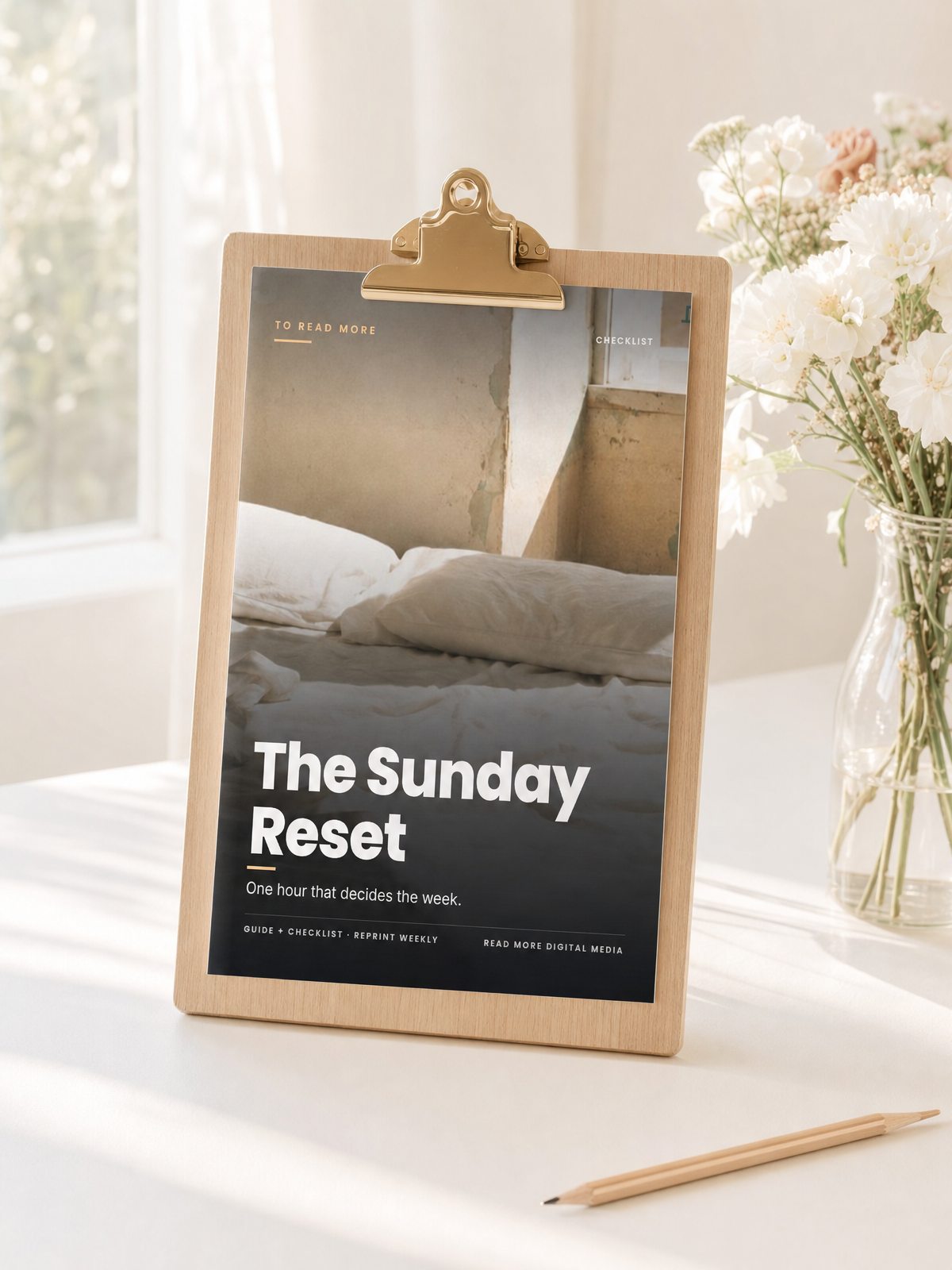
The Sunday Reset
A printable one-hour weekly routine that keeps your plan, your home admin and your week ahead in one place, so the priorities you chose in your reflection don’t disappear by February.
See inside The Sunday Reset →Planning next year? The three tools that carry a plan from the page into ordinary weeks are on one page: plan next year with To Read More.
Want the exact words?
12 word-for-word scripts for money, work, family and saying no. Free, by email.

The Start Ugly Kit
You know exactly what to do. And still don't.
- Start Ugly
- Nobody’s Coming
- The Scroll
- The 45 Friction Cards
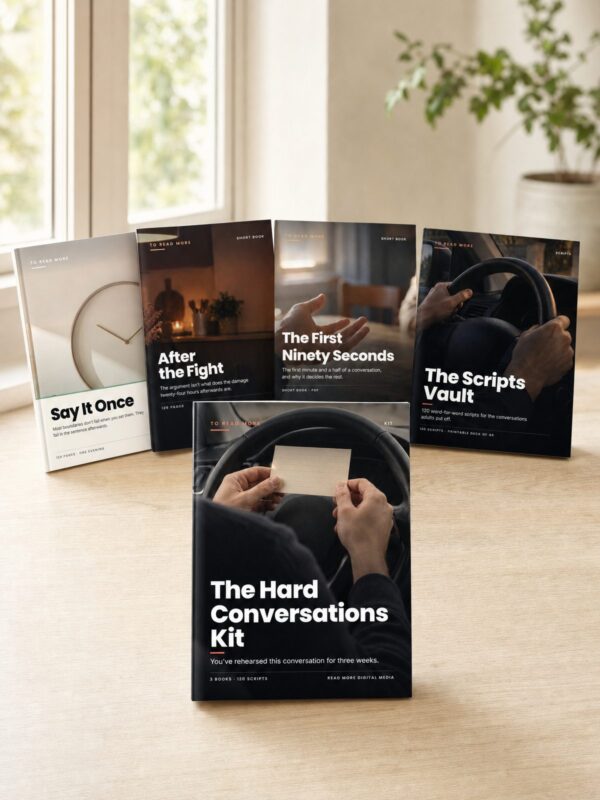
The Hard Conversations Kit
You have rehearsed this conversation for three weeks.
- Say It Once
- After the Fight
- The First Ninety Seconds
- The Scripts Vault

The Money Reset Kit
Paid on Friday. Broke by Tuesday.
- Broke by Friday
- The Money Reset Workbook
- The Life Admin Binder

The Quiet Mind Kit
The day ended hours ago. Your head didn't get the message.
- The 3AM Mind
- The Empty Tank
- The Overthinker’s Workbook